What is DataWalk's approach to intelligence-led investigations?
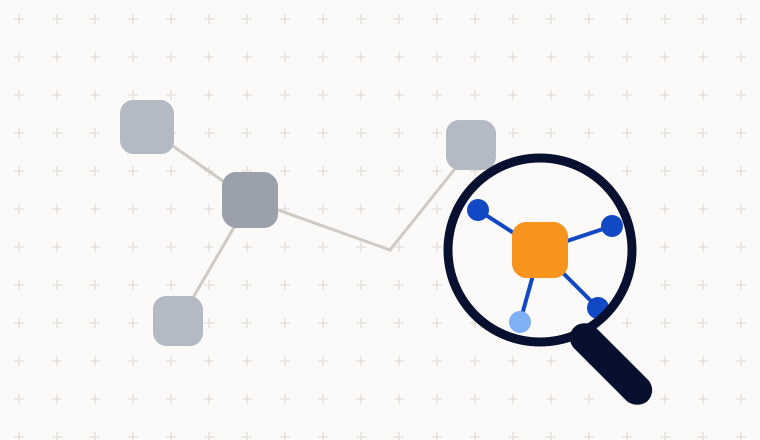
DataWalk's investigation solution connects previously siloed data, including crime and intelligence records, financial crime data, cybersecurity telemetry, and anything else, then resolves it into real-world objects such as people, organizations, and devices to reveal the relationships between them. Investigators can work across link charts, maps, search, no-code queries, text analysis, and AI on the same connected picture, and can adapt as criminals change schemes, networks, or hypotheses.
How does DataWalk combine data from separate systems into one investigation?
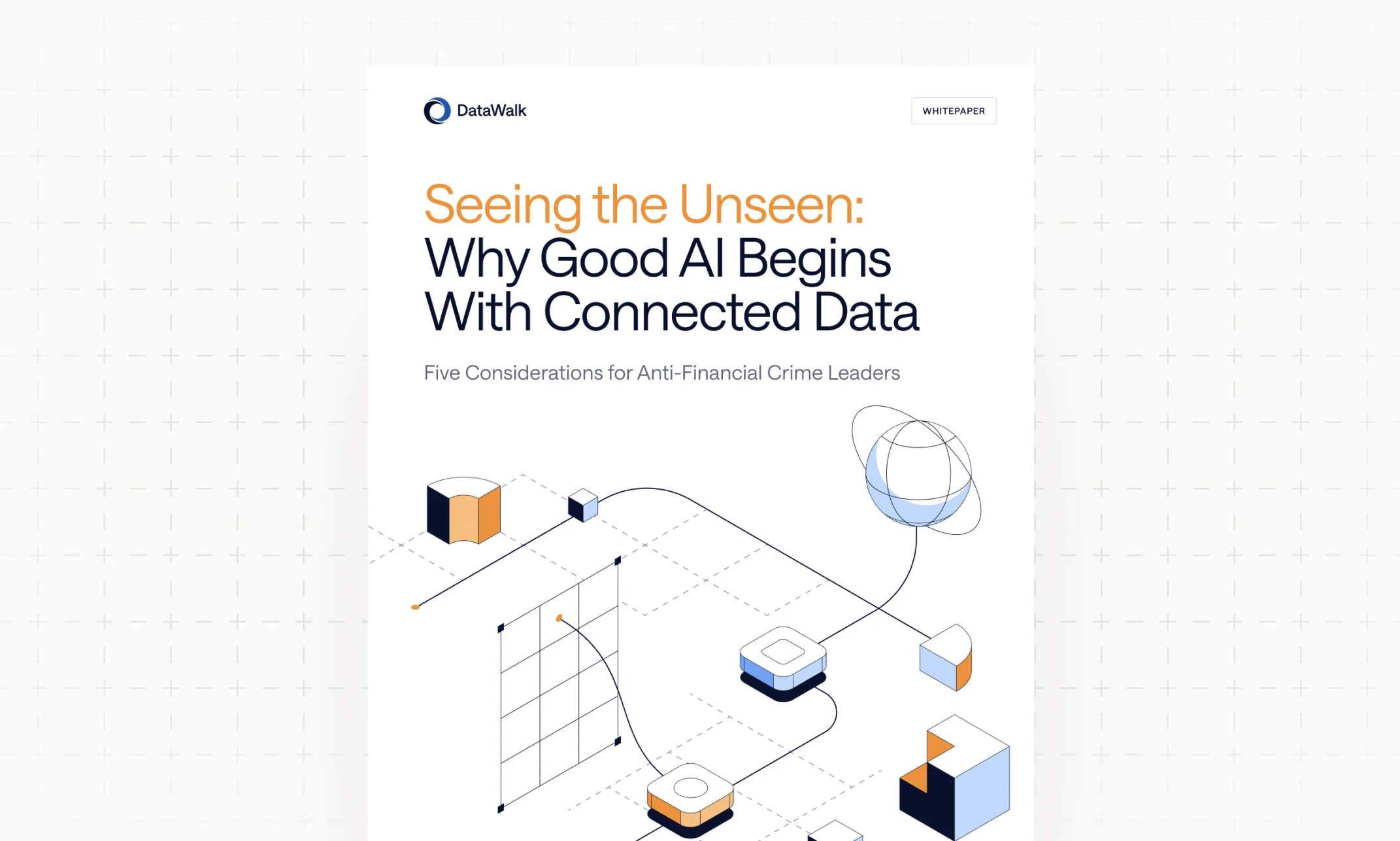
DataWalk combines internal sources such as case and incident records, claims and disputes, alert and case history, payments and transfers, and device and network logs with external intelligence such as PEP and adverse media, beneficial ownership, corporate registries, and watchlists. It resolves this data into objects like people, organizations, transactions, and IP addresses, so investigators see relationships instead of rows and columns from separate systems.
Why do traditional investigation tools miss connected criminal activity?
Traditional investigation tools assess each activity in isolation, so a transaction with no flag, a low-risk alert, and a closed case can each look unremarkable on their own even though they belong to the same scheme. DataWalk addresses this by assembling the true scale of an operation across systems, since criminals reroute around single-system checks by adapting how they move money and structure their networks.
In DataWalk, how do AI agents investigate a case?
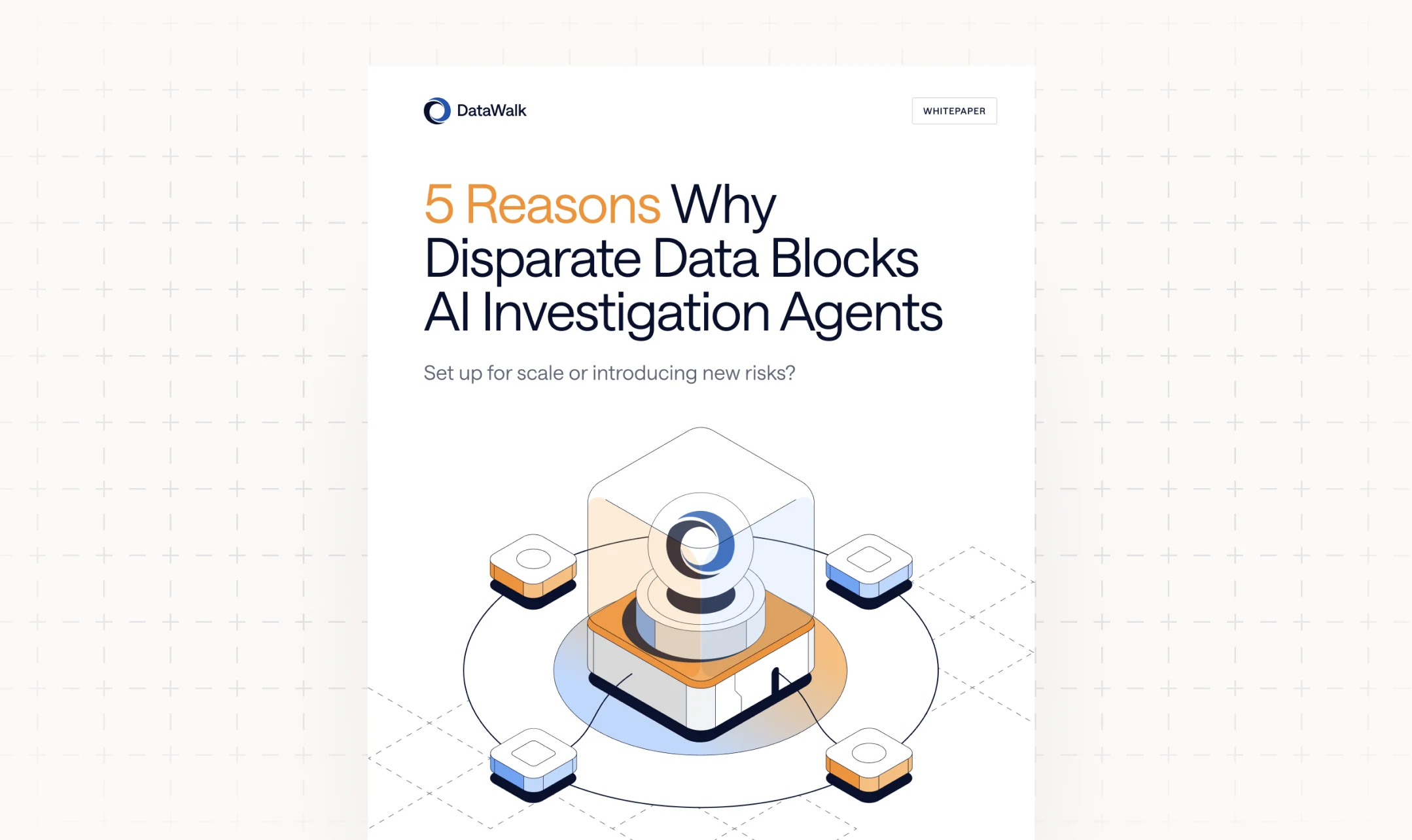
In DataWalk, AI agents explore the connected data graph step by step, viewing the evidence returned at each step before deciding where to go next, rather than inferring relationships from isolated records. This produces traceable answers using fewer tokens, and DataWalk runs these reasoning paths at scale without requiring teams to rebuild joins or reshape schemas for each new workflow, since every step is inspectable and can be reviewed.
How long does it take to deploy DataWalk for investigations?
DataWalk reports go-live timelines under 20 weeks for complex investigation deployments. Ally Financial went from kickoff to live in 19 weeks after bringing fraud, AML, and cyber data into one place for the first time. Once running, DataWalk has helped teams close complex cases in hours instead of weeks. For example, a Fortune 500 company had unsuccessfully investigated a fraud for four weeks, and then solved the $5.7 million fraud with DataWalk in 120 minutes.
Can DataWalk be deployed on-premises or air-gapped?
Yes, DataWalk can run air-gapped, on-premises, or in a customer's own cloud, with the deployment location kept separate from control over the platform. The customer's team owns the ontology, the rules, and every change made to it, so governance of the investigation environment stays with the organization rather than the vendor, regardless of where the system is hosted.



 RETAIL BANKING · ALLY FINANCIAL