


Contextual Fraud Detection: Uncovering Hidden Networks & Reducing False Positives
Contextual Fraud Detection: Uncovering Hidden Networks & Reducing False Positives
Table of Contents
Traditional fraud detection systems, reliant on static rules and siloed data, are no longer sufficient to combat modern threats. A contextual approach is now essential for identifying sophisticated fraud. By analyzing the complete context of an event–the relationships between entities, behaviors, and transactions–organizations can dramatically improve accuracy and uncover complex fraud networks that would otherwise remain hidden.
Why do traditional fraud detection methods fall short?
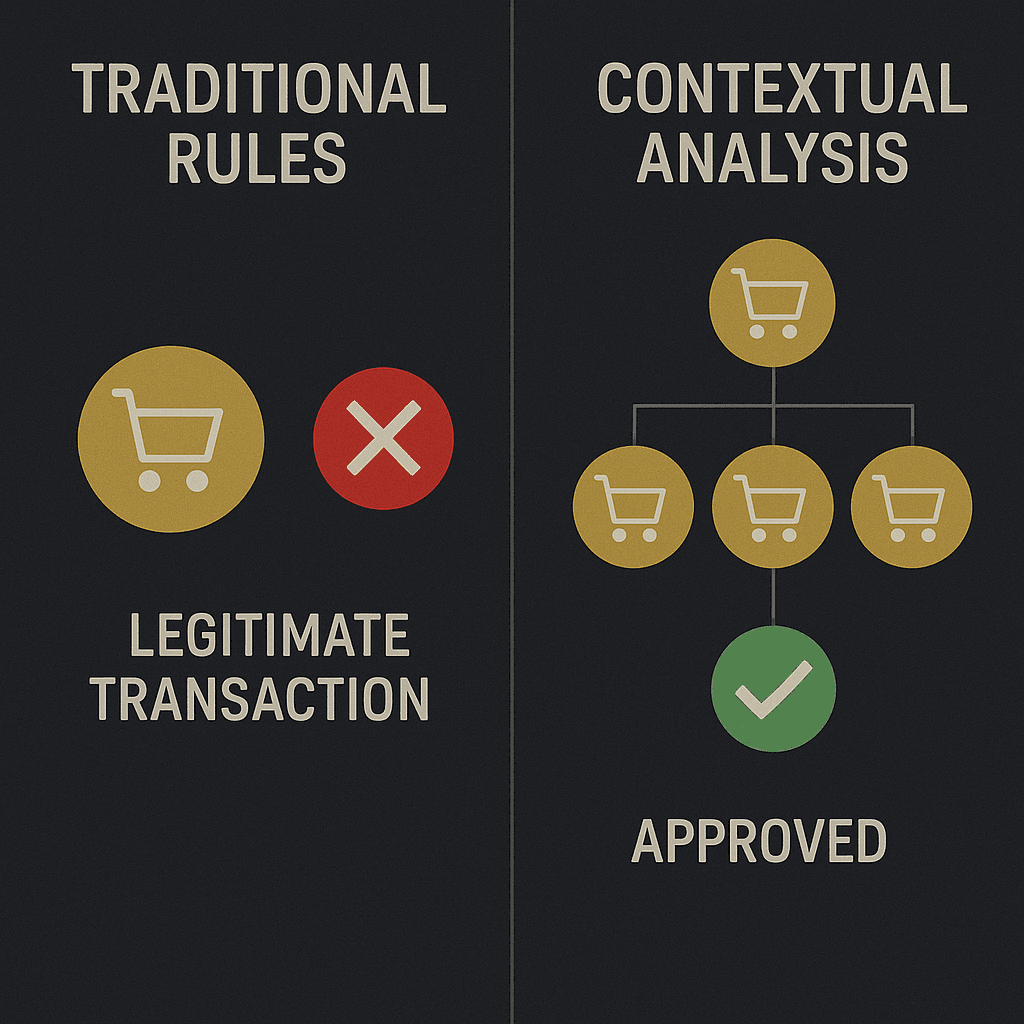
Legacy fraud detection platforms primarily rely on static, rule-based systems. These systems evaluate individual transactions or events in isolation, triggering alerts based on predefined thresholds. While effective against simple fraud, this approach struggles with the dynamic tactics of modern fraudsters who intentionally manipulate seemingly legitimate data points to evade detection. The result is a high rate of both missed fraud and disruptive false positives that create friction for legitimate customers.
What is contextual fraud detection?
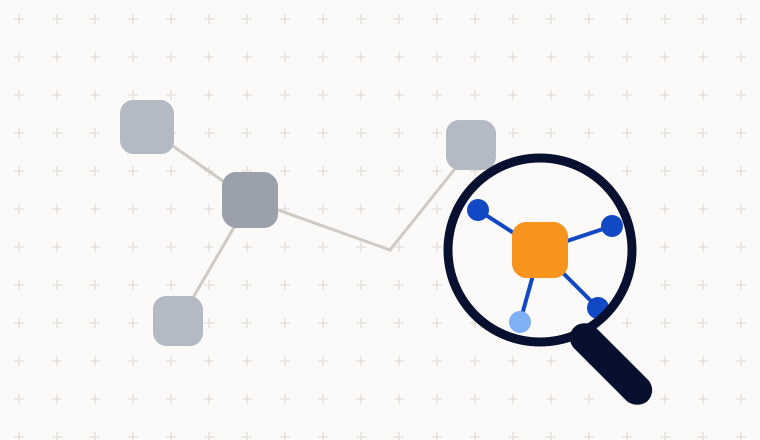
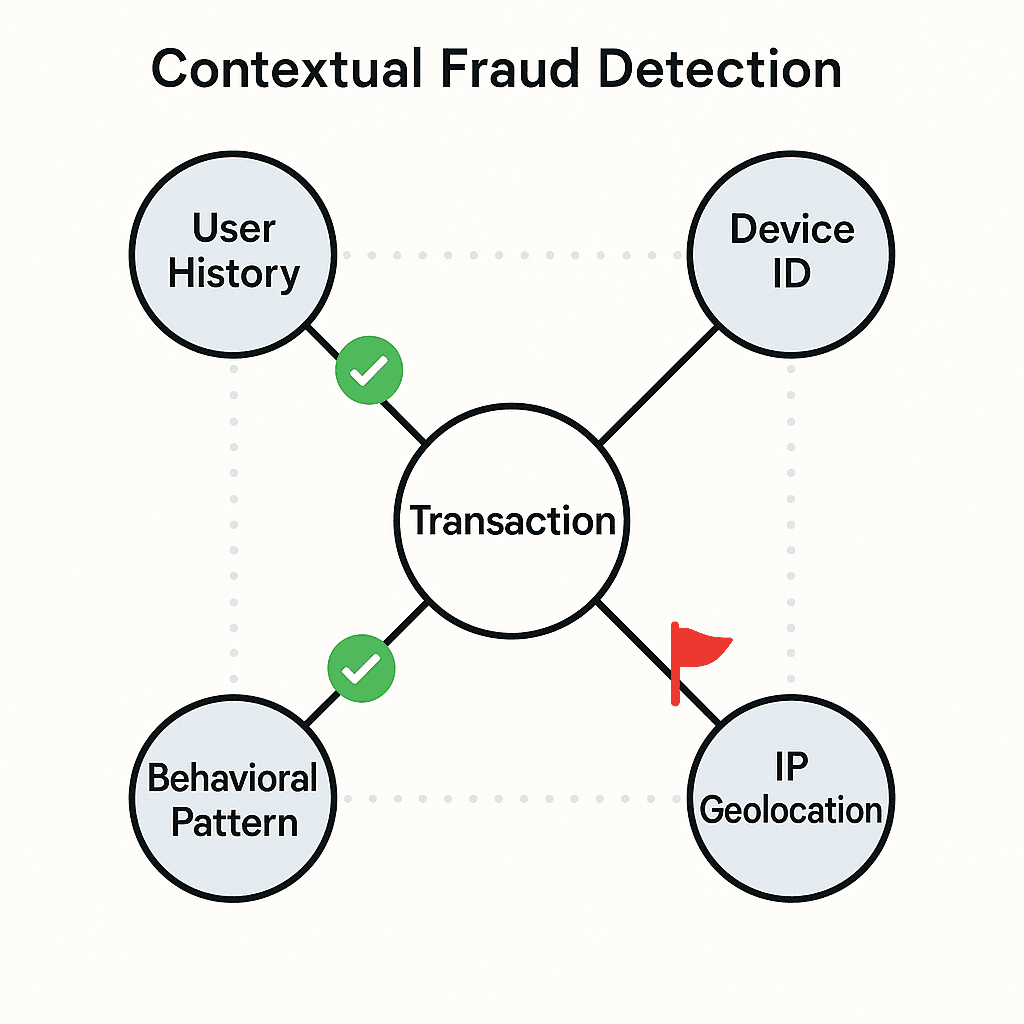
Contextual fraud detection represents a fundamentally new approach. Instead of analyzing data points in isolation, this approach evaluates the entire ecosystem of an event. It examines the relationships between all relevant entities–such as users, accounts, devices, locations, and transactions–to build a comprehensive understanding of the situation. By answering the “who, what, where, when, and how” for every interaction, organizations can accurately distinguish between legitimate behavior and sophisticated fraudulent activity.
What technologies power a contextual approach?
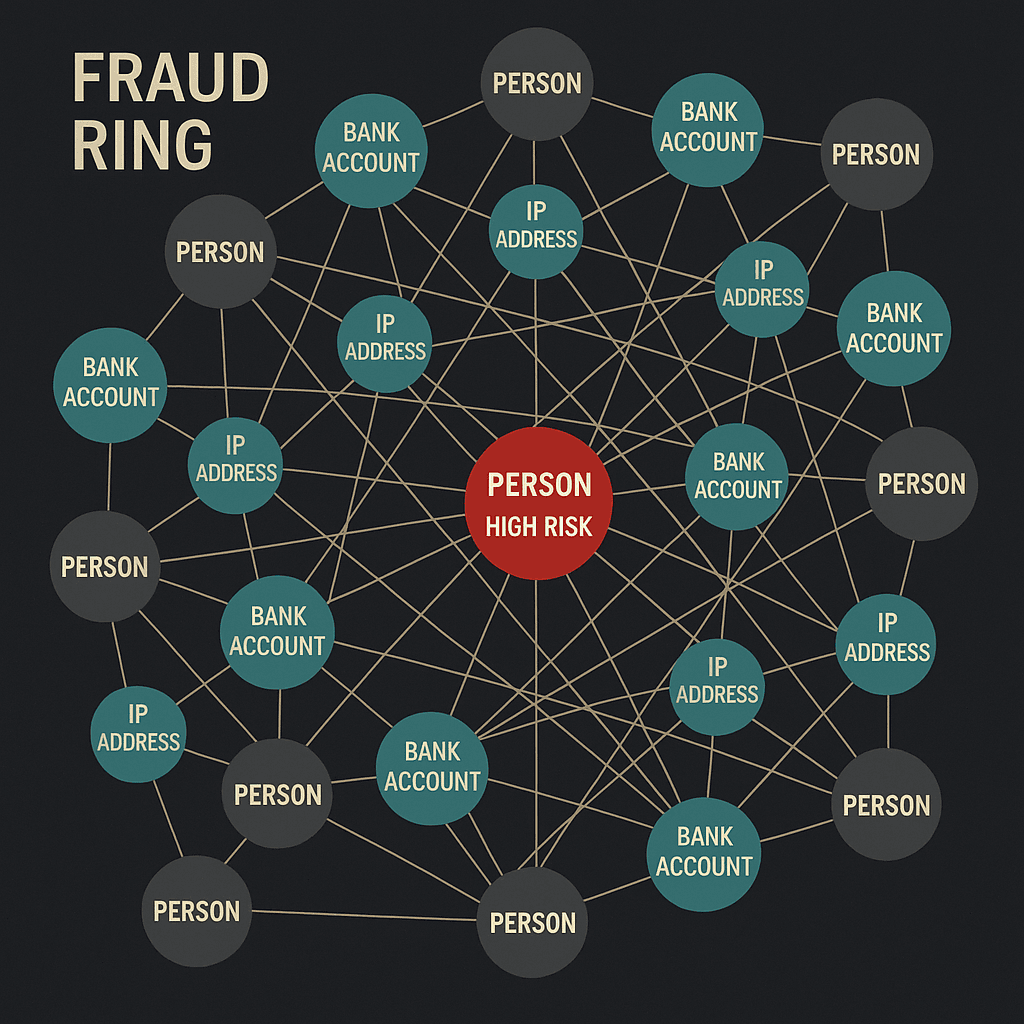
An effective contextual strategy integrates several advanced technologies to analyze complex datasets and reveal hidden patterns. Key components of modern fraud detection software include AI and machine learning algorithms to establish baselines for normal behavior and identify critical deviations. Graph analysis visualizes and analyzes complex relationships to uncover fraud rings. Behavioral analytics, device fingerprinting, and location intelligence provide additional layers of context, flagging inconsistencies between a user’s history and their current actions.
How does DataWalk enable contextual fraud detection?
DataWalk is a software platform engineered to deliver contextual fraud detection at enterprise scale. It moves organizations beyond the limitations of rule-based systems by consolidating all data into a unified knowledge graph. This creates a single source of truth where analysts can explore the complete context of any event or entity.
Within this environment, analysts leverage AI-assisted graph analysis, visual queries, and automated workflows to accelerate investigations. DataWalk’s platform is designed to automatically surface suspicious clusters and hidden relationships that are invisible to siloed systems, providing the critical context needed to stop sophisticated fraud.
What are the primary benefits of this approach?
Adopting a contextual approach delivers significant operational advantages. The primary benefit is superior accuracy, which drastically reduces the volume of false positives and minimizes unnecessary friction for legitimate customers. This method is also uniquely effective at identifying complex fraud networks, including collusion, bust-out fraud, and synthetic identity schemes, which traditional systems often miss. By providing a real-time, comprehensive risk assessment, organizations can respond to threats faster and prevent financial losses before they occur.
What challenges should organizations consider?
While powerful, implementing a contextual fraud detection strategy requires addressing several key considerations. Integrating disparate data from multiple sources into a unified view is a critical first step, and DataWalk technology is ideal for this process. Organizations must also ensure that all data handling complies with strict privacy and security regulations. Finally, the analytical models used should be explainable, allowing investigators to understand the specific factors that led to a risk assessment or alert.
Frequently Asked Questions
What is contextual fraud detection?
It is an advanced approach that analyzes the relationships between all data points (users, accounts, devices, locations) surrounding an event, rather than just the event itself, to accurately assess risk.
Why are traditional, rule-based systems less effective today?
They analyze events in isolation and struggle to identify sophisticated fraud tactics designed to appear legitimate. This leads to both undetected fraud and a high number of false positives that negatively impact good customers.
How does graph analysis help in fraud detection?
Graph analysis excels at visualizing and analyzing complex relationships within data. It helps investigators quickly uncover hidden connections, suspicious clusters, and organized fraud rings that are invisible to other methods.
What is a “unified knowledge graph” in the context of fraud?
A unified knowledge graph, like the one in DataWalk, consolidates all of an organization’s data from various silos into a single, connected model. This creates a single source of truth for analysis, providing the complete context for any investigation.
How does this approach reduce customer friction?
By analyzing the full context, these systems can more accurately distinguish between fraudulent and legitimate behavior. This significantly reduces false positives, meaning fewer legitimate customers are inconvenienced by blocked transactions or unnecessary security checks.
Can DataWalk automatically detect organized crime groups?
Yes, the platform is designed to automatically identify clusters of connected entities that exhibit patterns consistent with organized criminal activity, providing critical context for detecting complex fraud schemes.
DataWalk Platform
See DataWalk in action
Request a personalised live demo and discover how DataWalk connects the dots across your data.